Dream it
•
Build it
•
Grow it
•
Dream it • Build it • Grow it •
AGB 414 - Spring 2025
“I think she is doing an amazing job with teaching. I think her class time is used very productively and I nd myself using this information even outside of class. Her feedback is very productive and give clear communication on what she expects. I loved the case studies and the policy memo is very interesting and I've even used it during a job interview.”
AGB 414 - Fall 2024
“Professor Vourazeris offered an amazing and well-taught course this semester, and I'm sad it's over. It's rare and hard to find an amazing professor like Vourazeris who can make a dreadful course like government policy feel so insightful and relevant in every class. The course had me engaged the entire semester, and I would like Professor Vourazeris to continue teaching in the same compassionate way.”
AGB 414 - Spring 2024
“I enjoyed the student presentations and activites we would do as a class to get us a bit more involved. Overall the professor did an amazing job in navigating the course and in the future I know they will do incredible work and hopefully be able to educate more students.”
Teaching Statement
Throughout my education, I have experienced a variety of teaching and learning styles that have shaped my approach as an educator. I view teaching as a process that extends beyond the classroom, equipping students with critical thinking skills and analytical tools to navigate complex challenges. My role as an instructor is to foster this process by creating an environment that promotes intellectual curiosity, challenges assumptions, and supports students in developing their own perspectives.
At the core of my philosophy is the belief that every student brings unique experiences, strengths, and ways of thinking. Recognizing this diversity, I use a variety of teaching methods to ensure course content remains accessible and meaningful. By integrating real-world examples, student-led discussions, and problem-solving exercises, I help students build a strong conceptual foundation and the confidence to apply what they learn beyond the classroom. More than delivering information, I see teaching as a mentoring opportunity to guide students in their intellectual and professional growth, encouraging independent thought.
I translate this philosophy into practice through active learning, student participation, and adaptability. Each class is unique, often including students from both agricultural and business backgrounds, so I tailor my approach each semester to ensure relevance for all learners. One of my primary methods is case-based learning, which encourages students to analyze complex scenarios and develop evidence-based recommendations. While co-teaching Business Administration (BUAD) 453: Global Strategic Management at the University of Tennessee, I used Harvard Case Studies to guide students through data interpretation and decision-making. At Arizona State University, in Food and Agribusiness Policy Issues (AGB 414), as the Instructor of Record, I adapted this approach by having students lead presentations on topics such as SNAP, conservation programs, and H-2A labor. These peer-led discussions invite the entire class to question, debate, and connect key ideas, deepening understanding through collaboration.
To support inclusive participation, I use the 3-2-1 reflection strategy, in which students identify three takeaways, link two ideas to course concepts, and pose one discussion question. This method provides a structured way for all students, including those who are less comfortable speaking in class, to contribute meaningfully. It also serves as a formative assessment tool, allowing me to gauge comprehension and adjust lessons in real time.
Interactive in-class activities further enhance engagement by connecting abstract concepts to tangible experiences. The Smart Snack Challenge, where students evaluate snacks against nutritional guidelines, sparks lively discussions about food marketing and labeling. Similarly, the Daybreak simulation game, where teams work to reduce carbon emissions, encourages systems-based thinking about sustainability. We also host a game show, where students test their knowledge on food labeling. These activities make learning dynamic, memorable, and applicable to real-world decision-making.
I continuously refine my teaching through feedback and reflection. Mid-semester surveys provide insights into what is working and where adjustments are needed, helping me remain responsive to students’ needs. Through these methods, I strive to create a learning environment that is engaging, inclusive, and relevant. My goal is to prepare students not only to master course material but also to think critically and act thoughtfully in their professional and civic lives.
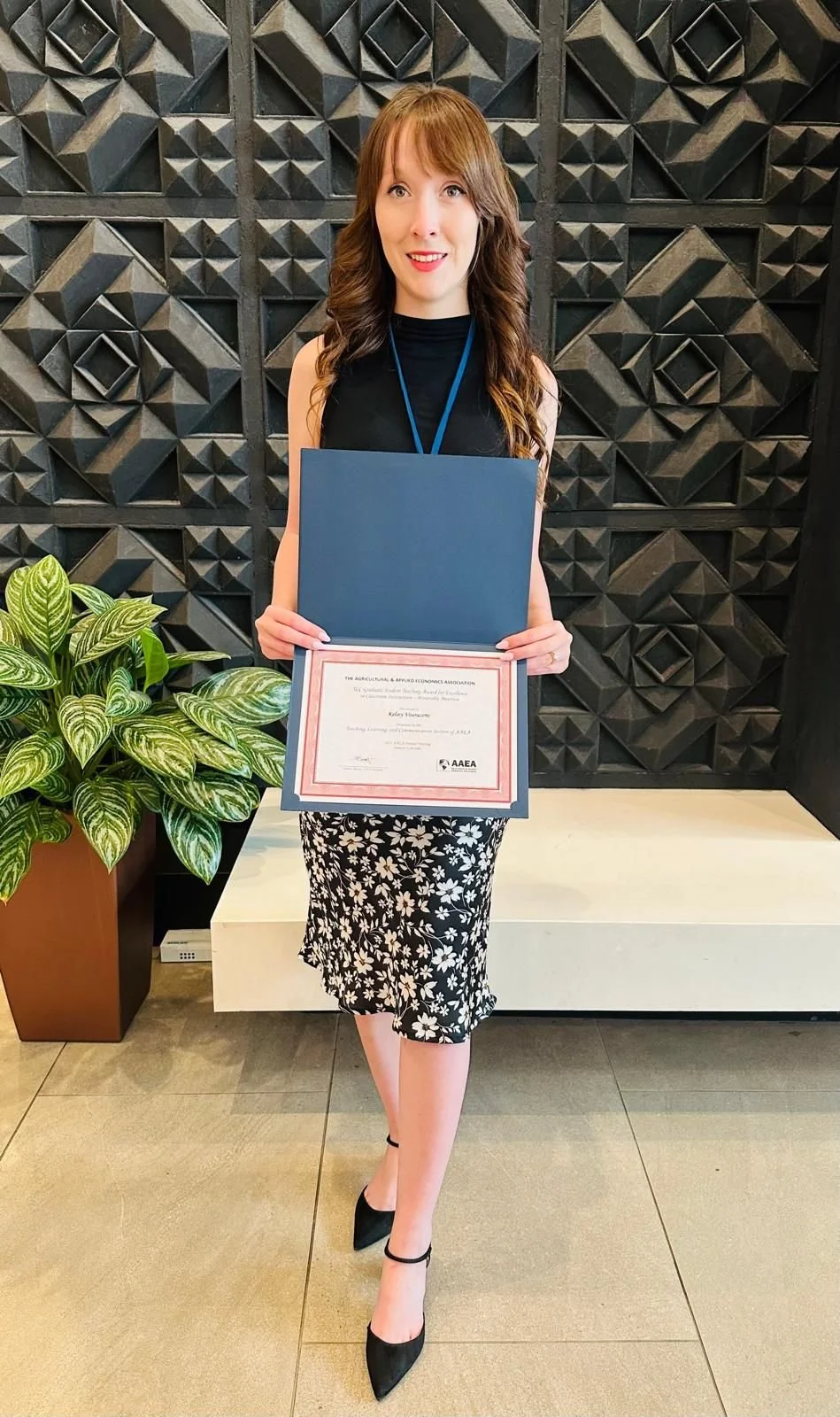
Honorable Mention, AAEA TLC Excellence in Classroom Instruction Award (2024–25)
Teaching Innovations
Vourazeris, K. Teaching Agricultural Policy Tradeoffs through DayBreak: A Classroom Board Game on Policy, Incentives, and Distributional Effects.
Teaching-focused paper documenting the design, classroom implementation, and learning outcomes of an experiential board-game activity used in undergraduate agricultural policy instruction.